Friday, January 13, 2012

The Wonder of Facebook

I think everyone has moments when they think "It wasn't like that when I was a kid..."  With the world changing as quickly as it has, even people born 20 years ago can say it and mean it. 

One of my favorite changes is social networking.  I really love Facebook, not just because it allows me to pretend I'm being productive when all I'm really doing is reading other people's walls, but because it affords a way of connecting that was never available before.

Through Facebook, I've found two people I've wondered about since I was in high school.  I had lost track of one when we were freshmen and her family moved from California to the East coast.  Another I never saw again after graduation.  But both flickered in and out of my mind over the years and with the help of Facebook, I was able to reconnect.  It felt almost like a miracle.

And through Facebook, I've been able to dialog with people I'd probably never have a chance to meet in my "real" life, like authors Anne Rice and Fr. James Martin, as well as people from all over the world. Because of Facebook, I was able to get real time pictures of the revolution in Egypt when it happened, for instance.

The reason I'm mentioning this today is because of my 2012 commitment to becoming more aware of things to be grateful for in my life.  Who would have known that a social network site on the internet would become such a major source of thanks? 

But it has.

And it is.

Thursday, January 12, 2012

The Legacy of Mother Teresa

Recently on Facebook, noted author Anne Rice linked a  Forbes article about Mother Teresa and allegations of less than sterling care provided by her houses and sisters.  Thiis controversy really isn't new; The medical journal Lancet wrote something similar several years ago. While I haven't devoted time or energy to determining the validity of these pieces, I did write a chapter on Mother Teresa in my upcoming book Facing Adversity with Grace. (I've also written  a book of her quotes, linked to bible verses called Listening to God with Mother Teresa.)

In the upcoming book on Adversity, I wrote:


As we look at the life of Mother Teresa, there something else about her attitude toward suffering that we need to examine, a feature that has generated some criticism from her detractors and that is her so-called “theology of suffering.” It was widely claimed in the medical press that because she believed ‘the most beautiful gift for a person (is) that he can participate in the sufferings of Christ,”[1] she did not do as much as she could to procure medical treatment for those in her Homes for the Dying and even subjected the patients to such practices as cold baths and the withholding of pain medication.
Whether or not they are true, these accusations remind us that saints are recognized for their passionate love of God, not for their infallibility. In looking at Mother Teresa’s life and the mental suffering she experienced, it isn’t difficult to see why she might have developed a particular theology that almost relishes suffering. She knew that she was offering her entire life to God as a gift and she also knew that she was in great mental anguish for most of it. She had to also have been aware that her “dark night” was like that of John of the Cross who, as an antidote to the pain, recommended, “Do the most difficult, the harshest, the less pleasant, the unconsoling, the lowest and most despised, want nothing, look for the worst”[2] for she clearly modeled her life and that of her sisters on that credo.
The problem is that one of the greatest temptations for all of us to assume that our personal experience is universal. We tend to generalize from our specific experiences. This may be what happened with Mother Teresa. Since she experienced her suffering as a blessing, it’s not hard to imagine she believed that similar suffering it would bring blessings to everyone. Because she was able to transform her pain into a love offering to God, it’s not out of the question to think she might assume that would be equally true for everyone else.
From believing that suffering is a great gift that you can give to God, it’s a very small step to wanting to make sure that others have ample opportunity to give that same gift to God. Thus, Mother Teresa might well have had an aversion to painkillers and a desire to implement stringent self-disciplinary practices in order to insure that the people she served were given ample opportunities to offer up their pain just as she did.
Here is where we can use Mother Teresa, not so much as an example of what we should do, but as a caution against what we might be tempted to do. God deals with each of us as individuals, including the suffering that he allows in our lives. We should be wary of extrapolating our unique experience into a generality for all people. Mother Teresa was a remarkable icon of holiness for our time. But she was also human and subject to assuming that the way God dealt with her was the way he deals with all people. This is not to say that her desire to offer up suffering was bad. It isn’t. In fact, offering up pain is one of the major lessons we can learn from the saints. But it’s not our job to see that others have a chance to suffer in order to offer up that suffering. What that means on a practical level in our own families is that while we may undertake certain disciplines (such as rising early for prayer or fasting), it’s not our right to insist that our spouses or children share those disciplines. All suffering, both that allowed by God and that created by our own choices, is always unique to the individual. Because of that, we have no right to try to “help” others find ways to suffer. Rest assured, they will find ample opportunity on their own.


[1] http://www.mukto-mona.com/Articles/mother_teresa/sanal_ed.htm


Tuesday, January 10, 2012

Are We Ready for a President Mittens?


In the nation's first primary, Mitt Romney took New Hampshire. Rather he will be the GOP candidate or not is still a long ways off, but what's really essential to know is that 2% of voters nationwide think his first name is....

MITTENS!!

According a 60 Minutes/Vanity Fair poll, a 20 percent plurality of us thought that "Mitt" was his real name and not a glove-like nickname. 18 percent said "Mitchell"; 8 percent, Milton; and only 6 percent correctly said "Willard." But the most important stat from the survey is that somehow, in some way, 2 percent of real-life adult voting Americans believe that his name is "Mittens."
 AND....Another 2 percent thought his name was "Gromit." As in, apparently the cartoon characters  Wallace and Gromit.(Given the state of American politics, perhaps a cartoon isn't so far off after all.)

 
However, as the article points out, any of the above are better than the connotations associated with Newt Gingrich. Who was born Newton Leroy McPherson.  I'm not sure that Leroy is much better than Newt, to be honest.

(I think the lesson here is to be careful what you name your children.  Oh, and Mitt's real first name, Willard, is that of a horror film about a rat.  Perhaps he is better off with the image of nice, warm, fuzzy hand-coverings.)

Serious ponderings will resume tomorrow.

Coping with Fear

One of the unexpected effects of my last year was the decidedly unwelcome visitor of fear.  As in heart-pounding, mind-swirling panic.  As an adolescent, I had experienced panic attacks, and again, but I had, erroneously, assumed that they were part of the past. When the first one came, it was an old familiar and most unwanted guest.The only good part about it was that I knew what it was, so I didn't have the "second fear" that often accompanies the physical sensations.  I knew that it wasn't fatal, wasn't going to last forever and I even knew what steps to take to mitigate it.

However, fear still entered through the door, dropped its coat on my couch and sat down for a long visit.  In fact, it still pops up now and then, as if to remind me that it hasn't quite gone south for the winter.

I've researched fear and panic from psychological, physical, mental and spiritual perspectives and I still don't completely understand what causes it.  I understand the biological changes, the adrenalin surge and all that.  I comprehend the erroneous thinking patterns that create F(alse) E(evidence)A(pppearing)R(eal). And I get that fear is the antithesis of love. But I'm still not quite sure why it would surge back at this time in my life. Or, more precisely, why I would be allowing it to return.

The only thing I can figure out is that, in its presence, I am being forced to take a long, hard look at my life. Fear is like a scalpel, laying bare what was under the surface. It is making me examine what I was doing and face the fact that a lot of it wasn't working.  Oh, it appeared to be working and I had convinced myself and a lot of other people that it was working, but under the razor-edge of fear, I am having to face the fact that things have to change.

I have to change.

Now I'm still working on what those changes are and how to bring them into my life, but along the way I have figured out a few things about how to use fear and panic to facilitate change and not let them totally use me. I hope that perhaps my experience will help you, if you find these unwanted guests shoving their way into your life.

Keep Active
If you let fear and panic have their way, they will take over your entire life. Especially if you just sit around. When I feel them creeping up, I do something, even if it's just the dishes. A little activity goes a long way.

Don't Isolate
The more alone and isolate you are, the more fear and panic can grow. So force yourself to get out. Make a phone call. Visit a friend. Confide in someone you trust. If necessary, get professional help. Just don't let fear and panic be your only companions.

Find a Spiritual Practice that Works for You
For me, returning to some of the prayers and rituals of my Catholic childhood has provided a grounding.  I don't know what will work for you, but I do know that reaching out for help from God has been a life-saver.  Just believing that I am not alone in this, that there is a light on the other side and that I can find Divine guidance has given me the courage I need to get through the day.

Accept What Is
This is the toughest for me, but it is absolutely vital. Much of what creates my fear and panic is an unwillingness to accept the reality of the moment. I don't want my mother to be in hospice.  I don't want to be looking for work. I don't want to be struggling financially.  I don't want to be alone.  But right now, the reality is that my mother is in hospice.  I am looking for work.  I do have financial issues.  I am alone.  The reality of the moment doesn't mean that the situation is permanent, but if I am to make changes, I have to accept what is right now.  

Believe in Positive Change
I truly believe that we get what we believe in.  As long as I believe that things are bad and going to get worse, that's what will happen. So each day, sometimes many times a day, I remind myself that each little step I take toward a more positive future is helping create that future.  And with each positive change, a little bit of the fear gets replaced by a little bit of hope.


Monday, January 09, 2012

Angry Birds

Most of the time I tend to be fairly serious, so I decided to lighten up a bit and try playing Angry Birds.

I hate to admit it, but I don't get the game.  No, I understand that it's based on laws of physics and I comprehend the principles involved in judging trajectories and impact velocity.  What I just don't get is why tossing irritated birds at green pigs is fun.

So what is the appeal?


Elder Care and an Anniversary

I've been responsible for my mother for at least the past 12 years, with a couple of less-intense years before that.  The care has steadily increased, as is always the case with eldercare, reaching what I thought was maximum velocity a year ago.

She was in an assisted living facility at the time.  I got the call about 2 am.  She had fallen and was taken by ambulance to the E.R.  I drove through the deserted streets, that  much I remember, and I know I had to have parked somewhere and gotten myself into the E.R., but that's all a blur.  As are the next several days, with medical tests and decisions battering me from all directions.

She had broken both legs and, at 91, two doctors told me it would be a "terminal event" and wanted to know if I merely wanted her heavily sedated with morphine for the few days or weeks it would take for her to "pass."  Knowing my mother, I was 100% sure that she would survive the surgery and go on to live for a long time.  Seeing as how we are now approaching the one year anniversary of her fall, I feel fairly vindicated at the decision to have surgery and complete rehabilitation. 

Wants vs Needs

The year of her recovery has been, however, a major contributing factor to my year of debridement. I have always had a difficult relationship with my mother.  Not that we ever argued.  Or that there was anything visible on the surface.  I simply did whatever she wanted whenever she wanted my entire life.  There was never any conflict, because she got her way in all things.  Now, however, I couldn't give her what she wanted--which was a totally pain-free recovery with me at her side 24/7.  And in realizing that I couldn't give her her wants, I became aware of my own needs. Actually, for the first time, I realized that I did have needs and they were just as important as everyone else's wants.

You'd think that by age I'd have learned that lesson, but I was raised with an incredibly strong mother who doled out equal doses of parental and Catholic guilt, heavily seasoned with Catholic teaching on the need for self-sacrifice.  So it had to have been a God-thing, that just as I was becoming aware of my needs, I was writing a book on Facing Adversity with Grace, stories of saints who had to work through suffering.

Telling Myself Stories

I began the book just about the time she fell and I finished it just as she was leaving the nursing facility.  I think if I had written the book any other time, it would have been a far different book, because as much as I was telling the stories of Mother Teresa and St. Helena, I was also teaching myself lessons about what suffering is, what it isn't and how it can either shape or destroy our lives. I just reread some of the passages and thought, "Hmmm...how is it that you knew these lessons but weren't really applying them?"

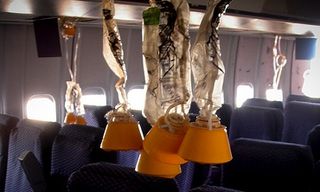
So now, on this mid-January morning, my mother is still alive and doing remarkably well.  We are coming up on the anniversary of her fall, which is also an anniversary for--the anniversary of the day that I began to learn that self-sacrifice isn't self-immolation and that taking care of one's own needs isn't selfish--it's essential.  Afterall, we have to have our own oxygen masks in place before we can assist others.  For too many years, I tried to help others with their masks while holding my breath. And, as I said a couple of days ago, one of the major lessons I learned was that breathing is important to life!


Sunday, January 08, 2012

Sunday Gratitude

I've decided that on Sundays I'm going to simply list 10 things that I am grateful for during the past week. (Unless something really interesting happens and I feel compelled to write about it.) 

So here goes:
1. A room of my own, as Virginia Wolfe said.  A friend of mine gave me free use of an office in his building to start the new year.  I'm hoping the separation of home and work, much like church and state, will help shift energy.  I'm anxious to see what new doors creatively and emotionally can open. 
2. Those who follow me on Facebook will know that over Christmas we had the GSD (Great Sewer Disaster).  This week the soggy carpet was removed and new flooring put down.
3. I got to attend a two-year-old's birthday party. It's good to be reminded just how splendid balloons are.
4. A friend brought me a tuna fish sandwich for lunch.  Sometimes it's the small things that make a difference.
5. There was sunshine a few days.  Here in Oregon in winter, one doesn't take seeing the sun for granted.
6. My African violet bloomed.  Since I have a black thumb, any plant that survives deserves a prize. Blooming is above and beyond the call.
7.  I discovered Words with Friends.  I've never been good at Scrabble and I have yet to win a game of WWF, but I'm enjoying the processing of regular loss.
8. I had one stick of rose incense left.  It's my favorite, so to mark Sunday, I'm letting its fragrance fill the room.
9. I remembered to charge my cell phone before it totally ran out of energy.
10. 2011 is over.  It's a new year.  I am grateful to have made it through.

Saturday, January 07, 2012

The Top 3 Things I Learned in 2011

Okay, I'll be honest. 2011 sucked for me.  Big time.  As I said when I called it my Year in the Burn Unit, it was spent careening from one unpleasant experience to another.  However, as I try to make sense of it, three lessons emerge.

Lesson Number One:  Breathing is Important
As the year wore on, I found myself literally and figuratively holding my breath, waiting for the next bad thing to happen. This was not a good thing.  For one, breathing is fairly essential to life.  The brain needs oxygen to survive.  Without it, one's thinking gets a bit screwy.  But more than that, when you hold your breath figuratively, you fail to live in the present moment. You are either dwelling in the past or attempting to live in the future.  In any event, you aren't fully present in the present. And the only place you can actually live in is the now. So in this year, I am focused on trying to remember to keep breathing, no matter what happens.

Lesson Number Two:  One Moment at a Time
This is definitely related to Lesson Number One.  When things were really tough I realized that if I just took things one minute at a time, I could get through it.  Sometimes I literally had to say to myself, "You are okay right now.  You are okay right now.  You are okay right now" to manage.  I learned that no matter what is happening, as long as I am still alive, I am okay in this precise exact moment.  Now there may be an individual moment sometime in my future when I won't be okay, but so far I haven't found it.  So even when I am feeling panicky or fearful or despairing, as long as I take a step inward and remember that I am okay at this minute minute, I really am okay.

Lesson Number Three:  I Can Control My Reaction
I suffered under the illusion that I could control things for many years.  This past year, I realized that I can't control squat.  Maybe even less than squat.  The only thing I can control is my reaction to what is happening.  And along with that, I finally figured out that I do have control over my reactions. They don't just happen without me. In fact, events themselves don't have any inherent goodness or badness attached to them (most of the time.  Genocide, murder, etc are a different category.)  For instance, if I spill coffee on my blouse in the morning, is that a bad thing? Only if I think it is so and allow it to ruin my day. It can be anything from a minor blip to a big honking deal...it's all in how I look at it and how I react to it. So after last year, I'm trying to be in control of my reactions and not let them control me.

Interestingly, in researching Facing Adversity with Grace, these lessons are some that I realized the saints applied to their own lives.  Saints aren't all that different from you and me in what happens to them.  The differences come because they have learned to live in the present (while considering, but not worrying about the future or trying to relive the past) and in controlling their reactions.  In the midst of everything that happens to them, they are able to make their reaction one of thanks IN and not FOR.

Which probably should be Lesson Number Four:  Remember to be Thankful IN all things. Maybe that's the most important lesson of all!


Thursday, January 05, 2012

Small Change(s) and Many Magi

I don't do change well.  People who know me say that I cling to the status quo until my fingers turn numb.  Now I don't think I do that...exactly...but I will admit that I don't approach change with anything resembling enthusiasm.

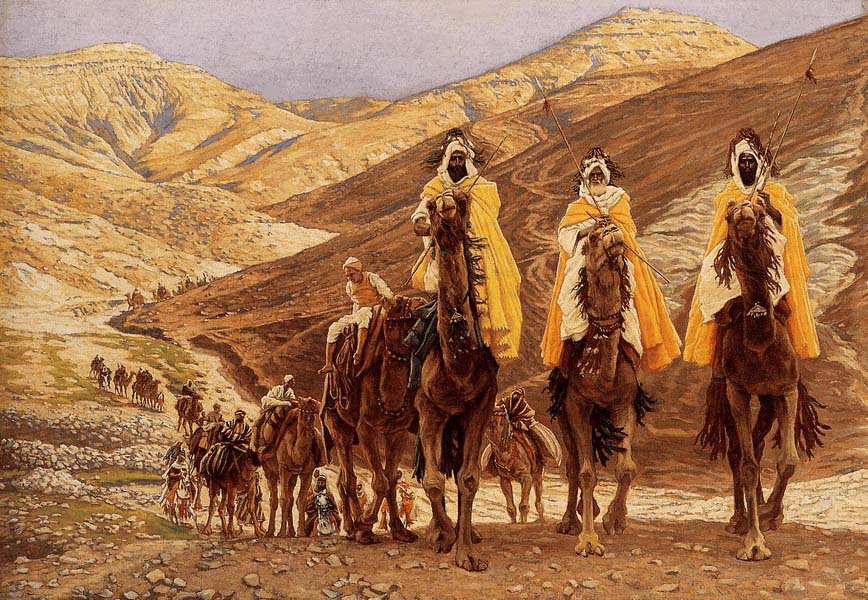
However, today, on Epiphany, there is one change that intrigues me.  In November, religion scholar and expert in ancient languages, Brent Landau Th.D, provided the first English translation of an ancient Syriac manuscript that was in the Vatican library about the Magi.

The manuscript, discovered in Turkey and written on vellum (a kind of parchment made of animal skin which I had a chance to see when I visited Turkey last fall), had languished in the Vatican since the 18th century.

What's interesting about the account is that instead of the traditional three Wise Men, the new research indicates that there might have been as many as 40 and instead of coming from some nearby Middle Eastern country, they may have journeyed as far as from China.

The USA Today story on the topic reports:

Landau's book, Revelation of the Magi: The Lost Tale of the Wise Men's Journey to Bethlehem (HarperOne) describes the Magi as an ancient mystical sect descended from Seth, the pious and virtuous third son of Adam and Eve. From Seth they inherited a prophecy of "a star of indescribable brightness" someday appearing and "heralding the birth of God in human form." This same star had initially hovered over the Tree of Life in the Garden of Eden.
Among the book's other revelations:
•The Magi are described as coming from a land called Shir, "located in the extreme east of the world, at the shore of the Great Ocean." In other ancient texts, Shir is referred to "as a place where silk comes from," says Landau, suggesting that the references were to China.
•In Syriac, the word Magi means "to pray in silence." Landau says it has no relationship to magicians or astrologers, sometimes cited in stories today.
•The text names 12 Magi, not three, while other parts of the text suggest that "a group the size of a small army" traveled to Bethlehem, says Landau.
Gives a whole new slant on the Christmas story, doesn't it?

5 Ways to Practice Gratitude

One of the things I learned during this past year was that gratitude doesn't come naturally to me.  Perhaps just as some people are filled with the milk of human kindness, others are filled with the wine of gratitude, but I'm not.

However, I have discovered 5 ways to learn how to be more grateful each day.

1.  Be attentive
When I drift through life, not really paying attention to what's going on, I miss many of the small things that make up daily gratitudes.  For example, as I sit here this morning, the sun has emerged from hiding, something it does frequently in Oregon winters, and is illuminating the yard with gold.  If I didn't stop and look outside, I would have missed this moment for gratitude.  And trust me, it won't last long in Oregon, land of the grey drizzle.

2. Write it down
I always think that I'll remember from day to day, but once I go to bed, I promptly forget everything I might have been grateful for the day before.  I have to write down what I've noticed or it will evaporate forever.  So each night, before I turn off the light, I simply jot down two or three things in a simple journal.  Nothing fancy, no elaboration, just "Sunlight on the deck this morning" or "Call from a friend."

3. Think small
I don't always have big, huge, ginornous things to be grateful for each day and I doubt you do either. After all, we can only get our dream job, take a once-in-lifetime trip, fall in love now and then. However, every day has something in it that can create gratitude...as long as we are willing to think small.  A cup of coffee with just the right amount of cream.  Clothes fresh from the dryer.  (No trying to dry on a rack in front of the heater.) A cuddle with the cat.  If you shift your focus from the macro to the micro, there is always something to be grateful for.

4. Keep looking
There have been times when I honestly didn't think there was anything to be grateful for.  Those were the days when I didn't allow myself to go to sleep until I found one thing, even if it was just that I had survived another day.Through that process I learned that there is always something, no matter how minute, that I can be grateful for, even in the midst of the worst times.

5. Make a commitment
If you want to find things to be grateful for, you need to find things to be grateful for. In other words, you need to commit to making gratitude a part of your daily life. It's a little like brushing your teeth. You have to do it every day,


Wednesday, January 04, 2012

Thankful IN, not FOR

Yesterday I said that I felt 2011 was my year in a life burn unit. As I reflected, I realized that it was very much like having my entire life debrided of those things that weren't authentic, weren't on focus for my purpose in life.  I had spent many years, too many, putting aside and putting off those things that a small still voice had encouraged me to do.  Instead I did things that I thought were expected of me...and, to be honest, a lot of them were expected of me and a lot of them were actually good things to do.  But I had buried that little voice so deeply I could no longer even recognize it when it was shouting. So that's why I think I had to have my life debrided.  All the things I thought I could count on, that I had taken for granted (and not necessarily in a good way) had to be painfully scraped away until I was left, raw and bleeding emotionally and psychically. I learned what it felt like to stand on the brink of what used to be called a nervous breakdown, and it was not a place I would wish on anyone.

But somehow, through a combination of grace and friends and prayer, I have managed to step back from the edge.  It's still close, but not as close it was just a few months ago. I knew things were getting better when I finally sorted my socks.  Now that might not sound like a big thing, but for months I just stuffed the socks in a basket, and searched for pair or something that appeared to be pain-like when I needed socks.  When I actually took the time to find the mates and put them back in the drawer where they belonged, a mundane act if ever there was one, I realized that maybe things were improving. (No, this isn't my drawer, but I think I have that many socks.)

As I said, I'm still en pointe a lot of the time, but with the new year, I'm feeling the touch of "the thing with feathers That perches in the soul," as Emily Dickinson calls it. One of the things that has helped is to make a concerted effort to tell a friend about the abundances, the blessings that have occurred each day. Even when the day was at its worst, I knew that I had to find something to send her in an email, even if the something was as simple as "I made it through another day without feeling like panicking."

It wasn't always easy because, for a long time, most of my life to be honest, I misunderstood 1 Thessalonians 5:18 (in everything give thanks; for this is God's will for you in Christ Jesus).  I thought it meant that we were supposed to be happy about everything that happened.  Woo Hoo, I got a flat tire!  Yippee, I was just fired.  YES!! I've just gotten really sick.  YEAH God, this is so cool!

I couldn't understand how anyone was supposed to feel floods of joy and happiness resulting in an outpouring of thanksgiving when bad things were happening. In the course of writing about saints and adversity, I came to realize that even the saints weren't always tickled to death about bad things.  And I realized that I had been misreading the bible verse all these years.

We don't have to give thanks FOR all things...only IN all things.  Big difference. God doesn't expect us to be all starry-eyed with joy when life batters us with pain and suffering.  God would be sadistic and we'd be masochistic if that were the case.  What we are asked to do is to find the good in the bad, the blessing in the midst of the pain, the happiness in amongst the sorrow. It's sort of like seeing the flowers amid the weeds.  Or maybe seeing that the weeds themselves are flowers.

It isn't easy to do, but I've found it is possible. Take last year, for instance.  It began in January with the axle breaking on my car---while I was driving it.While I certainly didn't give thanks for the break or the repair or the inconvenience of it all, I am finally able to be thankful that I noticed something was wrong just as I was driving by the dealership repair shop.  I turned in and had they look at it right that moment.  Had I driven even a few more yards--or attempted to get on the freeway--I would have been in a serious accident with a high potential of injury or death.  So now, looking back, I can say that I found something to be thankful for in the midst of it all.

It's taken me some time to absorb the lessons, but as I wrote in the introduction to Facing Adversity with Grace:
I firmly and absolutely believe that God does not want us to suffer, but wants us to live abundant lives. While we all will experience some pain on our life journeys, becoming entrenched in suffering is not honoring God and it is not living abundantly. So my hope for you is that as you read how the saints used their suffering, you will discover, not just words of spiritual consolation, but genuine, practical measures that you can use in your daily life in order to eliminate unnecessary pain and to claim the abundant life God has promised each one of us. After all, this life in the “vale of tears” may not always be easy, but it is always good!
So what have you found to be thankful for IN this day?


And for your Nefer/Basti update, I think Basti is channeling Spiderman here. He is one determined cat. He promises me that when he comes down, he'll resume his Dispatches from the Front.  God save us all!!!


Tuesday, January 03, 2012

Debriding Life: A Burn Unit Kind of Year

As many of you know, 2011 was probably the worst year of my life.  As I was going over my daily planner in preparation for filing it away, I found myself mentally careening from one awful thing to the next.  I thought about composing a sort of anti-Christmas letter for the New Year since I didn't send out Christmas cards, but it was just too depressing and negative to recall all the horrid events.

However, some of the lowlights included having the axle break on my car as I was driving it, Nefer destroying my laptop, my mother falling and breaking both legs, killing my beloved cat Hati by hitting her with my car, financial problems, illness, a second fall for mother, more financial problems and lack of free-lance work, visit to the ER with chest pains, house repair issues, the new laptop from January having its hard drive crash totally in November and finally to cap off the year, massive sewage problems over Christmas.  Not to mention a few classic panic attacks in there...hence the visit to the ER.

This could just have been a series of unfortunate events a la Lemony Snicket, but there were so many this year wouldn't have been believable even as fiction.  So I concluded that there must be some reason behind them all, something that I was attracting into my life and that God was permitting.  In other words, I thought that the events might not all just be random, but there might actually be a purpose behind them.

As I reflected on my year, there were several times when I thought that death would be preferable to going on. But deep down, I knew that death really wasn't an option.  Not only would it be incredibly selfish and unfair to those who care about me to prematurely opt out of life, I had a deadline for a book on facing adversity with grace.  How would it look if someone who was trying to encourage people that suffering had meaning would give up on her own suffering.  Very bad form, indeed. (Incidentally, the amazon page has the first cover.  The new cover is much better and reflects the intent of the book much more clearly.)  So I trudged through the year, feeling a bit like Dave Berry, who thought that 2011 was the kind of year that makes an oil slick look good.


That's when the  image of a burn unit sprang to mind.  I know that in order for a burn victim to heal, the wounds must be painfully debrided, a process that is, apparently, among the most excruciating procedures in medicine. All the old, unhealthy tissue has to be cut, scraped or chemically removed in order for new, healthy tissue to grow.  Even with heavy-duty narcotics, the pain is almost unbearable.

And the really hard part is that the tissue that must be removed isn't necessarily infected.  However, its mere presence makes it harder for the body to fight infection and creates pockets where infection can develop. So all the tissue has to be removed in order for the person to recover.  It is literally a case of going through the pain or dying.

So, in order to try to make sense of what happened to me, I'm doing what all words-people do: write about it.  For the next few days, I'm going to talk about some of the things that happened and try to share whatever lesson I might have learned from it with you in the hopes that perhaps my journey might lend you some insight into whatever adversity you might be going through in your own lives.  Beginning tomorrow...there's only so much visiting adversity that I can face in a day.

One last thing--last year I followed the sad case of Fr. Corapi with what probably bordered on prurient interest. I just learned via Patrick Madrid that The BlackSheepDog has vanished from cyberspace.  With all the scandals the Catholic church has faced recently, I hope that this story has a happy and holy ending.


Monday, January 02, 2012

Touching History


I edit the Archaeology Audio News for the Archaeology Channel and one of the funner (yes, that's a word.  I may have just made it up, but it's now a word.) aspects is when we have the occasional story that deals with biblical archaeology. 

was likely used by Temple officials approving an object for ritual use — oil, perhaps, or an animal intended for sacrifice. Materials used by Temple priests had to meet stringent purity guidelines stipulated in detail in the Jewish legal text known as the Mishna, which also mention the use of seals as tokens by pilgrims. 

What makes this seemingly insignificant piece of play so amazing is that it is one of the very few objects that can be traced to the Temple that Jesus attended since the Temple was thoroughly destroyed by the Romans in 70 AD. 

In another life, I would have been an archaeologist.  I love seeing artifacts that link us concretely and really (in the sense of being real) to the past. Knowing that someone who lived and loved and fear and prayed and laughed and ate and did all the things that we do made this little seal 2000 years ago compresses history into something I can actually grasp.

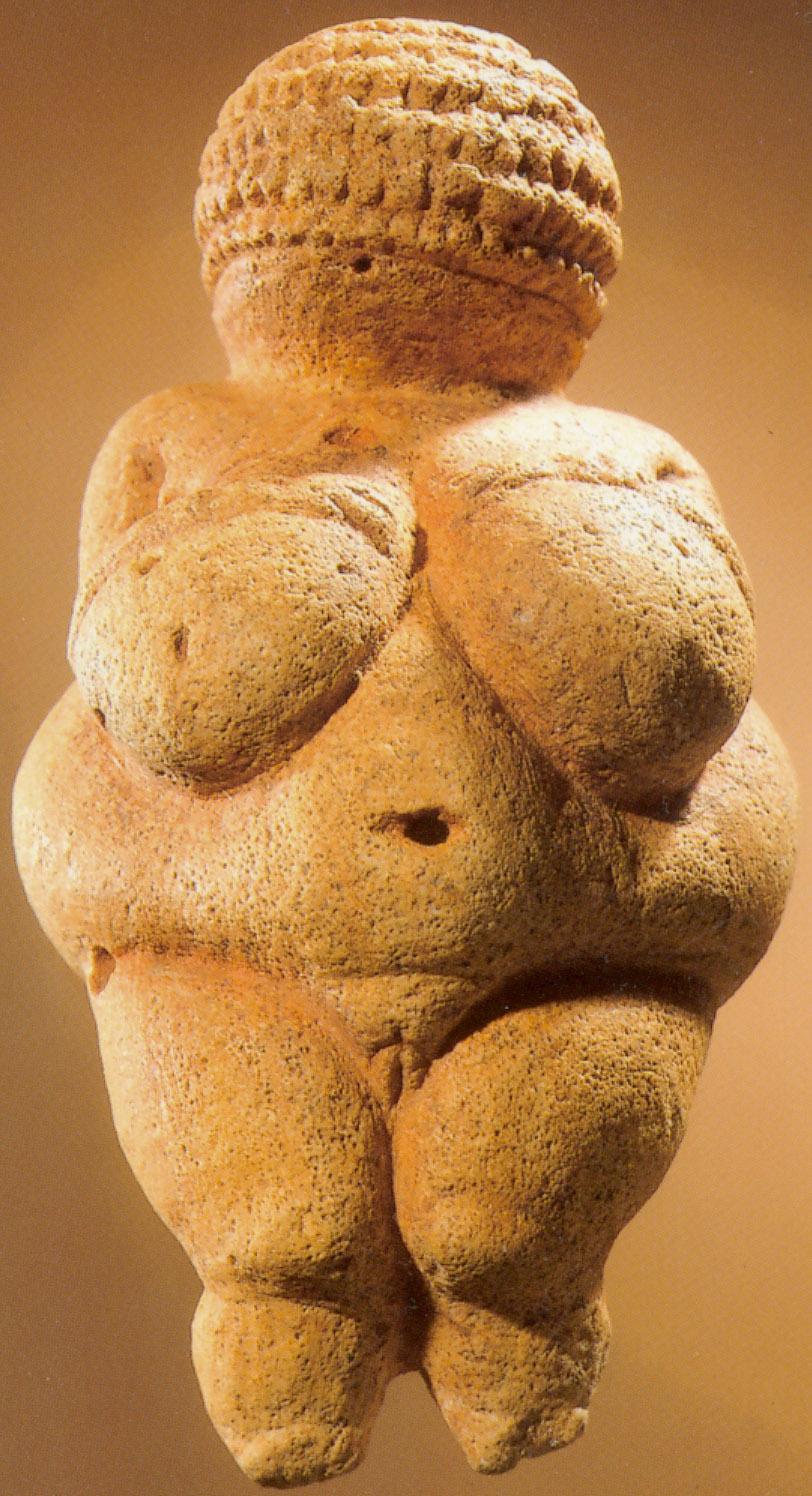
That's why one of my greatest treasures is an exact museum copy of the Venus of Willendorf given to me by a professor friend. Granted, she's not much to look at,

but what amazes me about her is how she fits in the hand. When you hold her, she cradles into the palm and your fingers fit precisely in what would have been the wet clay of her back.  But not just any hand fits. Venus fits comfortably in a small hand, like the hand of a woman. No man who has picked her up says she nestles within his fingers, but every women holds her and for a moment, there is a flicker of recognition that this figurine was probably made by another woman.

That's the sort of thing that I find extremely cool...and yes, funner!
 

Wednesday, December 28, 2011

It's been some time (as in years) since I have written on this, but with a new year...and a new website getting ready to be launched in 2012, I decided that January 1 would be a good day to make a fresh start.


This is, what the title says, my reflections on Ordinary Time, both the liturgical season and the regular days of life.  The things that capture my attention, attract my curiosity, make me wonder and hopefully make me laugh.

The adventures of the Royal Pair, Bastet and Nefer, will be featured and, if I'm lucky, Dispatches from Front, their continual attempts to escape the imprisonment of the house, will appear now and then.
  I figure there will be some news, some links, some reflections and a general glimpse into my world. I hope you will be joining me for life, if it isn't an adventure, isn't worth living at all!

Friday, August 15, 2008

Blackberry Time

When you hear the word "blackberry" and you are under 25, you automatically think of this:


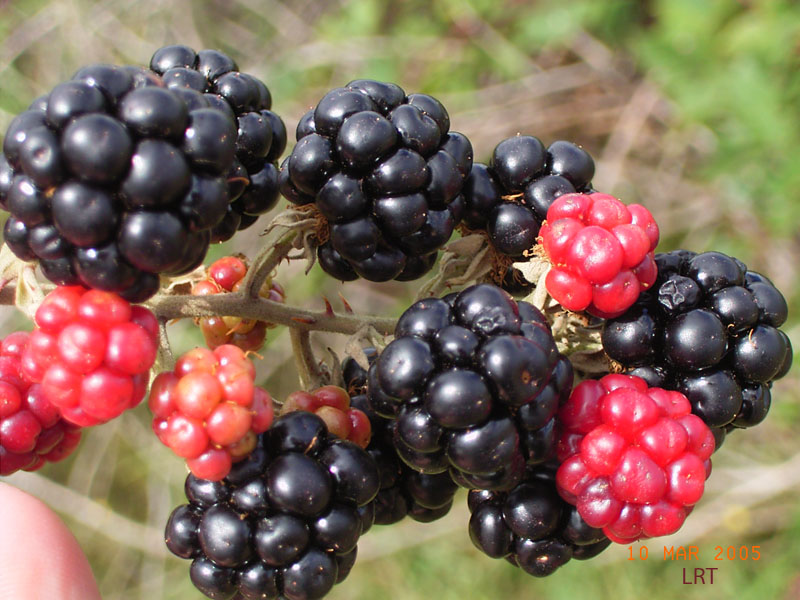
However, I am not under 25, so when I think "blackberry," I envision this:


On the side of my house, where the woodpile should be covered in a tarp so that the cherry tree I cut down will dry into lovely hard wood for the fireplace, I have blackberry vines. They snarl and tangle and weave their way through the split and unsplit wood, their thorns creating a barricade worth of Sleeping Beauty's Prince.
I considered cutting them back, but then I realized I had waited so long they had begun to fruit. Big black goblets swaying in the hot summer night breeze. I pulled off one, popped it in my mouth and felt the succulent scent of summer on my tongue. For a moment, I was 10, and I was picking blackberries alongside the railroad tracks near my grandmother's house. I pulled off another and another and another until my fingers were stained with their juice. I did it then and I did it now.

Dusk was falling, but I wasn't willing for the moment to end, so I went back in the house, brought out a small bowl and proceeded to fill it. As the deep purple berries plunked one on top of the other, I felt drawn back in time, not just to my own childhood, but into the far distant past where generations of hunter/gatherers collected berries in the fullness of summer.


I was doing what women had done for tens of thousands of years. Collecting the bounty of the earth. And eating it. One for the bowl, one for my mouth. I'm sure they did the same thing, gorging themselves on the ripe fruit even as they gathered it for the rest of the group waiting back at the camp.

It seems only fair. When you are the one getting scratched and pricked by the cat claws that cover the vines you should be able to eat as many as you want.

So I did. And there still were enough to put in the refrigerator for breakfast tomorrow.

Tuesday, July 08, 2008

Discussion Question

Okay, time for discussion question and no, it's not just to see if anyone is out there reading this. Although that would be nice to know, too.

The question is: Do any of you feel the same way?

Now, the set up. I was trained that you finish what you start. Anything less isn't worth doing. So if you start to clean the kitchen, you clean the kitchen. You don't quit when there still are dishes in the dishwasher to be put away, even if they are just barely dry. A task started must be completed or else you've somehow failed.

This method worked moderately well before I got some health issues. Now it's just plain not possible. And so when I do as much as I can, it never seems like it's good enough. I hear a tape that plays, "Okay, so you got one flower bed weeded; there are five more waiting, you slacker."

Do any of you experience anything similar?
If so, how do you deal with it?

Monday, July 07, 2008

By Any Other Name
If I had known the word at the time and because I love puns, I'd have called this blog "Catholicon." (Although I think there is another blog by the name, referring to Catholic and icons. But that's not what I was thinking.)

I would have been thinking about this:
Maybe this:Probably not this:

But it does give a clue as to the inner workings of my warped mind.

Sunday, July 06, 2008

Yard Work Redux


I am beginning to think that I will never be enamored of yard work. In any way, shape or form. Except maybe dead-heading flowers. I might enjoy carrying a basket, wearing a bonnet and plucking a few faded blooms.


However, that is not the kind of yard work I had to do today.

Today I had to haul hoses.

Make a pilgrimage to Mecca to return a hose I didn't need.
Plant some petunias that were on their last leaf.


Leaf blow the patio.Demoss the deck.


I didn't get it all done. But I made progress. In my next life, I'm having a gardener.

Thursday, July 03, 2008

It's my blog and I'll share if I want to

I've been writing a novel off and on for years. Something like 16 years actually. Since I resurrected my blog, I've resurrected the novel as well. So I thought I'd put up the first chapter, just for shits and giggles as my ex-husband used to say.


Amarana
Innundation

"What about that one?" Smenkeret pointed to the center of the crowded courtyard where a dusky, almond-eyed slave was being led toward the auction block by Paneb, the only son of Imanut, the slave trader.

The Lady Anefereti, daughter of the royal scribe Khnumhotep and, by virtue of being a half-sister of the Pharaoh’s Great Wife, a blood member of the royal household, raised one delicately plucked brow. "Surely you jest."

"She appears to be in good shape," Smenkeret said to his mistress. "Strong. Healthy. Young," he continued evenly.

"Indeed." Anefereti slanted her tall steward a sideways glance, but he had turned to watch the scene in the courtyard.

She watched in bemusement as the slave trader’s son desperately tried to act as if this weren't the first time his father had entrusted him with the responsibility of bringing a slave onto the block. It was no easy feat for a lad who still worn the sidelock of youth for, despite the rope tied tightly around her neck, the slave managed to swing her hips seductively as she crossed the dusty yard. Her only item of clothing, an ornate girdle of blue and red faience beads riding low on her slim waist did nothing to hide her obvious assets and a low whistle of admiration circled the crowd of browsers, gawkers and possible buyers.

Anefereti had had dealings with Imanut before. He was the most respectable, honorable and honest slave trader in the entire city of Amarna by his own account, and the biggest cheat in the whole of the Red and Black Lands by everyone else's. He was also well known for selling attractive slaves; a fact he was not averse to proclaiming loudly and frequently to anyone who would listen. Of course he sold them for much more than they were actually worth, but what were a few bushels of wheat more (never less where Imanut was concerned) when beauty was at stake, he always said.

Just as the boy began to climb the three steps of the granite auction block, the slave whom rumor had it had been reluctantly returned when her last master’s wife gave him an ultimatum along the lines of if-she-doesn't-go-I-will-and-remember-just-whose-money-set-you-in-your-business, planted her feet in the fine red dust at the bottom of the steps and waited. The boy reached the second step and almost lost his balance when the rope pulled taut. Clearly, it was the opportunity the woman had been waiting for. She widened her stance, thrusting her hips suggestively forward and refused to budge. The boy looked down at her and his cheeks flushed. He rocked from side to side, finally turning toward his father.

Anefereti nudged Smenkeret and pointed toward Imanut. “I’ll bet he’s trying to cheat that man out of an extra roll of linen.” Just then, Imanut kicked one of the rolls behind his omnipresent jar of beer and began loudly claiming that the buyer had cheated him.

The seconds stretched; the crowd held its collective breath and the boy, after blowing out his breath in a loud sigh, sagged his shoulders and shouted to his father. Imanut, having been convinced by the buyer’s bodyguards that he had already received more than twice as much linen as the last slave had been worth, was leaning over to take a draught of beer.

Imanut spat out the mouthful of warm liquid and hoisted his ponderous frame from the well-padded bench he always placed in the shade between buildings, scattering crumbs of bread from his once-white robe as he did. Grabbing the prod he used for herding cattle and slaves, he scuttled across the courtyard with surprising speed for one so fat and jabbed the woman in her shapely rear, hard enough to make her yelp, but not hard enough to injure her. Imanut never marred his merchandize..

Smenkeret chuckled under his breath and Aneferiti shot him a disapproving glance. Why do men always find such things amusing, she wondered. How would he like it if someone jabbed him in a delicate area?

She watched as the slave woman resisted a last moment, muttered a curse under her breath, then gave in and mounted the steps so quickly the boy staggered and almost lost his balance. In a show of what appeared to be embarrassed bravado, he swaggered to the edge of the block, tied his end of the rope to the ring on the auction post with a flourish and jumped down, raising a thick cloud of red dust where he landed. Imanut watched, a self-satisfied grin crinkling his pudgy face. The slave glowered at the trader, cranked her head around to see the small, raised welt where she'd been poked and then massaged the spot with her long, thin fingers. For the second time, a whistle of admiration flowed through the crowd.

Imanut pointed his prod toward the slave and began his spiel. "This one's been well trained in domestic service in one of the Empire's finest households and will make an excellent servant," he said. The slave, who had been well trained, but clearly not in the domestic arts and hardly in one of the finest households, scanned the crowd, catching the eye of a young scribe. Once he was staring unabashedly at her, she lowered her thick, black lashes and let the tip of her tongue ever-so-briefly flicker over her full lips. It was obvious to anyone watching that the pasty-faced scribe had decided he had to make her a part of his household no matter what the cost. "I believe she's had musical training as well," Imanut continued, having observed the exchange between the woman and the scribe. "Do I have an offer?"

"Are you going to bid on her?" Smenkeret turned to ask blandly, idly stroking his thick, closely cropped black beard.

The Lady Anefereti narrowed her kohl-rimmed lids and scowled. "I'm not looking for an addition to the harem. I'm looking for a maid." Straightening her shoulders, she brushed an invisible bit of lint from the deeply pleated sleeves of her white linen tunic before continuing. "If I didn't know better, I'd swear you were a stallion instead of a gelding," she whispered sharply.

"There are always memories," Smenkeret whispered back, with more than a hint of amusement in his voice.

"Not at my expense, there aren't," she replied, in her displeasure raising her voice just enough so that Imanut who was anxiously watching the crowd in an attempt to force the bidding as high as possible glanced in her direction. At his questioning expression, she shook her head and he turned back to the scribe who had wormed his way to the front of the auction block and in a loud voice, suddenly doubled the current bid.

A gasp rippled through the crowd. "Sold!" Imanut shouted, hastily closing the bidding before the scribe could change his mind.

The young man jumped forward, tripping over the folds of his robe in his eagerness to reach the platform. The slave batted long lashes and smiled.

“By tonight it will be difficult to tell who is master and who is slave in that household,” Smenkeret smirked. “By morning, there will be no doubt.”

Anefereti closed her eyes and waved a painted feather fan in front of her face Smenkeret always seemed to be able to embarrass her when she was least prepared.

As Imanut and the scribe worked out the details of payment, the milling crowd began to disperse. Now that the piece de resistance of the day had been sold, most of the on-lookers were drifting away, back to their shops, their homes, their duties.

Anefereti moved into the shadow of a building where the afternoon heat was a bit less oppressive. "What other woman are being offered today?" she asked as she snapped her fan shut.

"There's only one more. She wasn't available for viewing, but I'm told she's well-trained in household duties," Smenkeret said.

"Humph. I'll believe that when I see it," Anefereti snorted. "Imanut claimed the other one was a domestic servant, too. If she's ever baked a loaf of bread in her life, then I'm the King's Daughter. I wish Tetisheri could return to her duties," she said wistfully tapping her fan on her fingers. Tetisheri was her maid-servant, and her friend. In many ways she was more of a sister than her own sister.

Smenkeret folded his arms across his chest. Like most who lived in the Red and Black Lands, he was deeply tanned, but no matter how many hours he labored in the sun, he would never be as dark as those who were born on the banks of the Nile. Even Anefereti, who had spent most of her life within the cool shadows of the palace and its courtyards, was a darker, richer bronze than her tall slave. "I've been meaning to talk to you about that," he said.

For the second time that afternoon, the Lady Anefereti scowled. In the background, Imanut extolled the virtues of a rheumy-eyed, middle aged man, trying to encourage higher bidding from the restless crowd. "So talk," she said coolly.

"Tetisheri's husband asked me about purchasing her freedom and that of their son."

"And you told him to speak to me, of course."

"Not exactly."

"Not exactly? Then what exactly?" She felt a strange sinking in the pit of her stomach.

"I said I'd discuss the price with you."

Anefereti drew a sharp breath. "You said what?" The sinking feeling suddenly turned to anger.

Smenkeret looked sheepish. "It seemed appropriate at the time."

Anefereti squared her shoulders and drew herself to her full five feet. Enough was enough, she thought . "You may be in charge of my other slaves, but you aren't the head of the household. If you aren't careful, I'll put you on that block next time," she threatened.

Before Smenkeret could respond, a scuffle in the courtyard drew their attention. "You son of a river hog, he's mine," shouted a tall, gaunt wine merchant whose face was flushed as much from anger as from sampling his latest batch of private reserve.

"May you never see Osiris, you liar," added a rotund pottery dealer, shaking his fist at Imanut who was carefully keeping his beer jar between him and the angry merchants.

The crowd, which had thinned considerably after the slave woman had left the block, began to fill back in as merchants poked their heads from stalls and passersby suddenly found a new interest. Only last month, a member of the King's guard had presented Imanut with a bloody nose when a scribe had raised a bid after Imanut had proclaimed a slave sold but because the scribe’s offer was substantially higher than the closing bid, Imanut had tried to pretend he had been sneezing from the dust and that the man who thought he had made the final offer had misinterpreted his distress as a sign the bidding was closed.

While his father was dancing around both the beer jar and truth, Paneb strutted into the courtyard. With great self-importance, he yanked the rope and woman at the end of his lead stumbled, catching her balance only by grasping at the stairs. At that, the boy pulled the rope and her head jerked under the strain. She wobbled as she climbed the block and had to clutch the bronze ring at the top for support. Swaying in the relentless sun, she tried to maintain her balance by holding the ring with both hands, but at length she failed, collapsing at the boy's feet. The boy stared down at her, his mouth agape, the rope still clutched in his suddenly sweaty palm.

Anefereti narrowed her eyes against the glare of the sun. There was something about the woman on the block; something she couldn’t quite place that attracted her interest. She cocked her head toward Imanut who, by now, had calmed the merchants enough so that he wasn't in immediate danger of physical harm, then looked woman lying motionless on the block. She had to take a closer look. With the barest nod to Smenkeret who followed her lead, she crossed the courtyard, leaving a thin trail of red dust swirls on the sun-dried brick. The crowd stepped aside as she passed.

"You can't do that..." Imanut's son sputtered as she mounted the auction block and dropped to her knees beside the woman. Ignoring the boy who was hopping nervously from foot to foot, she picked up one of the woman's wrists and felt for a pulse. Satisfied the woman was not dead, but merely faint, Anefereti then lifted the matted, snarled hair from her face where a small reddish mark, perhaps a bruise, stained her cheek. "A foreigner," she murmured as the boy screwed up his face in anxiety. She fingered the neck of the woman's torn and soiled white linen robe, still bearing traces of its once crisp pleats. "Good quality." It bore a striking resemblance to her own robes, definitely not something a slave would be permitted to wear. Finally, she lifted the woman's hand once again, turning it over to examine the palm. "Not used to hard labor," she commented as she studied the long, delicate fingers which still bore pale indentations from rings. This woman had once worn more than the cheap jewelry of a common slave.

"She's not your typical slave," Smenkeret said what she had been thinking.

"No, I agree. But what makes you say that?" She was relying as much on intuition as hard evidence, but like most men she knew, Smenkeret didn’t have an intuitive bone in his body.

"These." Smenkeret lifted the tightly matted curls from the side of the woman's face to reveal small gold earrings in the shape of cowrie shells. "Since when do any of your slaves wear gold earrings like that?"

"Maybe she stole them from her last mistress."

"Then why didn't Imanut take them off before he put her on the block?" he asked.

"He didn't notice them?" she suggested.

"Imanut not notice? He'd steal from his mother's grave if he thought he could get away with it."

Anefereti stared at the small, golden shells. Egyptian woman sometimes wore cowrie shells—the real thing, not gold models—to indicate a recent birth. She lifted the front of the slave’s dress to see if her breasts were milk-engorged. They weren’t. Perhaps she had been wearing them in the hopes of having a child. Infertility was a curse and all women, from the Great Wife to the poorest servant prayed to be spared its ignomity. Smenkeret raised an eyebrow as she dropped the garment back in place. "We can ask her about the earrings when she wakes up."

"If she wakes up. And if she tells the truth."

Just then the woman's eyelids fluttered and she looked up with a confused stare, her eyes glazed and unfocused. Imanut's son tugged on the rope and started to say something, but a glance from Smenkeret caused him to clamp his lips in a tight line and drop the rope with a sullen glare.

"Water." The woman's voice cracked and she licked a swollen tongue over parched lips.

"Imanut might not be honest, but he usually makes sure his merchandise is in better condition than this before presenting it for sale," Smenkeret said, resting on one knee beside Anefereti.

"True." Anefereti stared at the woman who appeared to have fainted again. "If Imanut hopes to make any profit on her, he'd better get a move on. A few more hours in this sun and he'll have a corpse to bury instead of a slave to sell."

She tilted her chin and exchanged glances with Smenkeret. He lowered his head, silently asking if she wanted him to do something. Anefereti nodded, almost imperceptibly.

Smenkeret rose to his full height. Even standing as straight as possible, the slave trader's son, who was tall for his age, barely reached the middle of his chest. "Fetch some water," he ordered.

"Be quick about it," Anefereti added, holding up her hand to Smenkeret who pulled her to her feet. She ignored the murmurs rippling through the crowd beneath her.

The boy, clearly torn between his desire to obey her and her heavily muscled slave towering over him and his need to stay with the slave woman began sniffling pitifully. He was spared making a decision by the appearance of his father.

"Idiot," Imanut muttered under his breath as he hurried across the courtyard."No handling the merchandise," he puffed as he mopped his dripping brow with a wrinkled, gray cloth he produced from somewhere within the folds of his grimy robe. "Oh, Lady Anefereti." He stopped short and gave what would have been a crisp bow if he hadn't been too fat to bend in the middle. As it was, all he could produce was a massive wobble in the region of his upper belly. "A thousand pardons, my lady. I did not realize it was you." With a fierce glare at his son who backed as close as he could to the edge of the block without actually falling off, Imanut heaved himself up the stairs, droplets of sweat dripping off his sloping forehead. "Look all you wish, my lady. You grace my humble establishment with your beauty. Had I know you were here, I would not have kept you waiting. Can I get you something refreshing? Date wine? Pomegranate juice? Boy, get the Lady Anefereti..."

Anefereti waved her fan in mid-air. "You honor me," she said, "but all I require is some water." Imanut glowered at his son, who immediately jumped off the block and hurried to fulfill the noblewoman's request.

Anefereti bent back over the slave who was now trying to sit up and despite Imanut's startled look, said to her, "The water is coming."

The slave's reply was unintelligible. As she began to sink back into a faint, Anefereti nodded again at Smenkeret who with a grace surprising in a man his height and bulk, bent over and clasped his arms beneath the slave's limp body just as Imanut's son returned with a small crudely made-jar half full of tepid water.

As the boy jogged behind, three of his steps to every one of Smenkeret's, the big slave carried the unconscious woman through the obviously surprised crowd. He entered the relative coolness of Imanut's shaded bench and laid her on the folds of cloth which served both as a pad for Imanut's ample rear and as a convenient hiding place for such small items as might have the misfortune to pass into his grasp. Anefereti took the jar from the boy and tipped it to the woman's lips who swallowed, coughed a bit, then gulped another mouthful.

Anefereti waited until the slave had drained the jar, then wheeled to face Imanut who had followed hard behind. She had made up her mind. "I'll take her. Name your price."

Wednesday, July 02, 2008

Some of my (un)favorite things or I hate yard work

Aphids on roses and moss on the roof eaves
Scraggly flowers and ponds filled with dead leaves
Overgrown bushes and bird-eaten Bings
These are a few of my unfavorite things

Droopy old lilacs and unknown dead plants
Weeds in the deck that cause me to rant
Cheeky young squirrels that think they have wings
These are a few of my unfavorite things

When the yard browns
When the bee stings
When I'm feeling mad
I simply forget my unfavorite things
And then I don't feel so bad.

Monday, June 30, 2008

Roofs and Crowns

I've decided that two of the most expensive and least satisfying things to spend money on are new roofs and dental crowns. You can't really open your mouth and say, "Hey, look at this new porcelain beauty on that back molar!" And you can point out your roof, but if it's like mine, it looks just the same as the old roof. In fact, I can't even see a difference except for the lack of the hole that the raccoons made. No one seems the least bit interested in the new roof and who can blame them.

No, roofs and dental crowns are extraordinarily expensive and while both are vital (nothing like a tooth ache or a leaking ceiling to ruin your day), they are completely invisible monetary sinkholes.

Just in case you are wondering, I have both.